
My Elden Ring-Inspired Novel is Terrible (Here’s How I’m Going to Fix It)

When I started writing my new fantasy novel, The Shattered Ring, it was meant to be a lot of things. First it was going to be a standalone epic fantasy, then a political fantasy duology. Right now it’s a heroic fantasy trilogy.
All this change has occurred in the last almost 2 years I’ve been working on it, but one thing has always stayed the same; my direct inspiration for its world is the video game Elden Ring. Along the way, other inspirations worked their way in, like Warbreaker, The Lord of the Rings, and The Wheel of Time.
I opened TSR up to beta readers a few months ago and feedback has been mixed, but there’s a lot of recurring issues. Additionally, I stumbled across a couple of reels on Instagram recently that have really driven home some of its shortcomings. I’m going to be going through some of these problems, what I want to do to fix them, and what my vision is for this book. (No spoilers)
No More Joy and Happiness
…Okay, not really. But as I’ve been thinking about it, the more I realize that TSR’s world just doesn’t do what I wanted it to do for the story. What made me realize this was a reel on the philosophy of Elden Ring.
Elden Ring takes place in a dark and hostile world, ravaged by mad demigods and endless suffering. Everywhere you go, the people are trapped in this state of half-life. You, as the hero, are forced to choose a side; end suffering by burning the world down, or survive at any cost simply because you refuse to yield. Your choices are nihilism or existentialism.
The Shattered Ring, on the other hand, takes place in a world that, in my opinion, doesn’t have nearly the same gravitas. Don’t get me wrong; it’s suffering. The remnant of the human race (around twelve million people) lives on a floating archipelago the size of Australia, trapped between a glass dome and a radioactive ocean. It’s a harsh, rocky world where wood and crops can only reliably be grown with magic. The eight kingdoms are ruled by mad demigods who murdered their own mother for scraps of her divine power, and now they wage constant war against each other. Aiaona had it easy, too - its moon is still burning six thousand years later; another planet in the system turned to obsidian and ash; yet another planet is suffering a nuclear winter.
But even if I portrayed it that way well, which I don’t, one of the things that makes Elden Ring’s world so viscerally dark is that you can see the remnants of a dead world all around you. In places, you can literally walk through the graveyards of titans. Climb Giant’s Peak and you’ll walk through a forest of frozen giant corpses. Go to Leyndell and you’ll see a dragon corpse draped over a ruined castle, so big that you have to walk across it to progress. Caelid is infected by the scarlet rot, a disease that has driven two demigods to madness. All of this revolves around the Erdtree, one of the most stunning visuals I’ve ever seen in a video game; this massive tree of holy light, standing tall over a grey and lifeless world. I don’t think anything quite beats that moment when you first step out of the Shrine of Resurrection in Breath of the Wild, but your first glimpse of the Erdtree is probably a close second.

The Erdtree - Elden Ring
Going into my next revisions of TSR, my goal is going to be this: show, don’t tell. The world is broken. The old order needs to burn. But we can’t just take the characters’ word for it; every new place they visit needs to scream despondency. As much as I love writing philosophical debates, the stronger statement is going to be if they pass through the shadow of the skeleton of an ancient giant, through a forest where the trees weep blood, through a field where bones crack underfoot at every step.
I tried to show some of this, a beauty that was lost, in the capital city of Narielle, inspired by Shadar Logoth and Elantris - a once-white city that now lies in ruins, its people cursed with eternal unlife. I need to spread that out over the whole world. I need to fill it with dark and twisted things so that Aiaona feels like an enemy, actively working against Trel’s quest.
A Rebalance of Power
In Elden Ring, the hero is accompanied by a mysterious woman named Melina. The second reel I mentioned talks about why in Elden Ring and several of its cousins, including Dark Souls and Bloodborne, consistently include the same character archetype; a soft-spoken woman who supports the hero by infusing them with the power they’ve taken from slain enemies. This has a distinct psychological effect on the player, but not by making Melina and her ilk feel weak. Actually, it’s just the opposite.
Melina represents a form of purity and innocence that has been lost to the Lands Between. She is gentle and caring in a world that is relentlessly hostile. The contrast is stark, and so she naturally begins to convey a sense of comfort and safety to the player, who is forced to recognize immediately that you need her just as much, if not more, as she needs you. In a world that wants you dead, she offers the power you need to survive; in exchange, she just needs you to take her with you.

Melina - Elden Ring
One of the main characters in The Shattered Ring was directly inspired by Melina. Her name is Aranèle, and she was meant to play a similar role; guiding and advising Trel on his quest. Unfortunately, she wound up with some heavy main character syndrome, to the point where Trel no longer feels like the hero and starts to feel a little more like an NPC. While Trel was ripped away from his education before he could learn anything about the world’s magic, politics, or even which end of a sword to hold, Aranèle was trained by some rather prestigious figures and serves as the reader’s main source of infodumping, as well as a skilled fighter. There’s a couple of brief moments where it seems Trel will have to step up, only for him to wind up not having to, but most of the time Aranèle and Adria have to handle things.
TSR is a heroic fantasy; it’s intended to revolve entirely around the progression and growth of Trel as a character, but it can’t do that when he spends the first twenty chapters on the sidelines. To alleviate that, and force him to take center stage again, I need to foster a sense of mutual dependence between him and Aranèle. For her to fulfill her role, he needs to rely on her, but in order for her not to steal the limelight, I need her to rely more on him than she does.
One thing I want to do to balance her is to change her personality. One recurring complaint from my beta readers is that her personality and that of Adria, one of the other major characters, feel interchangeable, which makes both of them feel flatter. The reasons they think and act the way they do are different: Aranèle wears a facade of wide-eyed whimsy (think Sylphrena from the Stormlight Archive and you’re on the right track) while Adria is rebellious, so she’s determined to live her best life doing whatever she wants. But in both cases, this manifests as over-the-top enthusiasm, love of banter, and any one of a dozen other little quirks that just make them feel like echoes of each other. It doesn’t help that they both have powerful magic or that they’re both smarter and better at fighting than Trel is.
So the new Aranèle might feel a lot more like a Melina archetype; soft-spoken, gentle, driven more by a quiet sorrow. She can still be the brains of the operation, but her muscle needs to be used in support of Trel, because he can’t use her as a crutch for long. He’ll also need to hit the ground running, forced to go from the innkeeper he was to the hero he needs to be, because this new world I plan on throwing him into won’t be so forgiving, and there might well be some times where Aranèle can’t help him. These changes will change the party dynamic completely, as even Aranèle and Adria’s friendship becomes less of a ‘kindred spirits’ situation and more of a ‘it’s crazy that these two hit it off so well’ thing.
The Return of Wonder
One of the eight demigods is associated with the power of Wonder, but that’s not the kind I’m talking about. I’m talking about the kind you always expect to see in a fantasy world, the kind which makes fantasy. Very often, this wonder manifests in the form of magic, but at its core it’s some element that the reader knows isn’t real, yet leaves them demanding more.
Think about when you step out of that tomb for the first time and clap your eyes on the Erdtree for the first time. When you roll a natural 20 fighting a dragon in D&D. When Eru Illúvatar sang the world into existence in The Silmarillion. When Aang and Ozai have their final duel at the end of Avatar: The Last Airbender. We’d all bottle that feeling if we could, and my job as a writer is to make you feel it. My book should make you gasp when the plot twists, rage when the hero is betrayed, cry when your favorite character dies. Every page should make you want to turn it to see what happens next.
I don’t think TSR manages that. Its obvious story flaws bog it down. It gets infodumpy. I tell you things in long, expository paragraphs that you don’t really need to know. One of the biggest hurdles is the magic system.
Runeforging is inspired in equal parts by channeling in The Wheel of Time and BioChromatic Breath in Warbreaker. Everyone is born with these innate bits of power, and if you gather enough of them, you can ‘Forge’ them together to create new effects. For example, combining the power of Fire and Water creates a power of Stone; it works a lot like weaving in WoT, but the internal logic is way different, because it, like all of my magic systems, ultimately has roots in Plato’s Theory of Forms.
Problem? Well, there’s 29 Runes. All of them have different effects, both literal ones and metaphorical ones. They also all have names. For example, the Rune Vautin, which corresponds to the Moon, could be used to summon moonlight… or to enshroud your spirit so that you’re harder to detect. It’s a lot to keep track of, and I just can’t expect the reader to do that. One of my beta readers brought this up, admitting that she’d struggled with that in Wheel of Time, and suggesting that I draw inspiration from Gandalf. For those unfamiliar with Brandon Sanderson’s hard/soft magic system classifications, Gandalf is actually one of the best examples there is of soft magic at work. Soft magic doesn’t have clearly defined rules; we have a general idea that Gandalf can conjure and control energy, as he uses light, fire, and lightning at different times in the books… but we don’t really know how or why, and that’s okay.
Allomancy, on the other hand, is one of the hardest magic systems ever written. Sixteen metals, each with three distinct powers depending on who’s using them, and each with zero wiggle room. I’m a nerd, so I love hard magic systems. I can recite the properties of all known Allomantic metals in order across all three Metallic Arts from memory, so is it any surprise that I wrote a hard magic system? Nah. Nonetheless, my answer to that comment essentially boiled down to, “I’ll try to simplify it, but this is gonna be a hard system.”
So I plan to. I want to bring a sense of wonder into Runeforging. It’ll be hard, because it’s not a flashy system; at best it probably works a little bit like Doctor Strange's magic. It’s certainly not going to be a world-ending power like Scarlet Witch, but in Trel’s eyes, I need it to feel alien and fantastical. Even if he understands that this is a normal thing that anyone can do, there’s no reason why he couldn’t be left in awe.
Think Mistborn. Despite the diamond-hard rules, Allomancy hooks you from the get-go. The rules are powerful but simple, and you see them in practice long before anyone starts teaching Vin about them. Kelsier’s internal monologue in the early parts tells you how, and you learn why along with Vin.

Vin - Mistborn
Trel will never be a Mistborn. Actually, since Runeforging is gender-locked, he’s not in a good spot to ever use much magic (I don’t think that came from The Wheel of Time, just arose naturally as I built it around Aranèle, who was inspired by Melina). But his understanding of magic can grow from seeing it as this incredible force to comprehending its intricacies. At the same time, Adria’s magic comes from the power of Reality, with a huge list of rules and abilities, but it’s a mythological power on Aiaona, so even Aranèle will never fully understand it, while I can keep what it actually does very simple; rewriting Truth and Lies themselves.
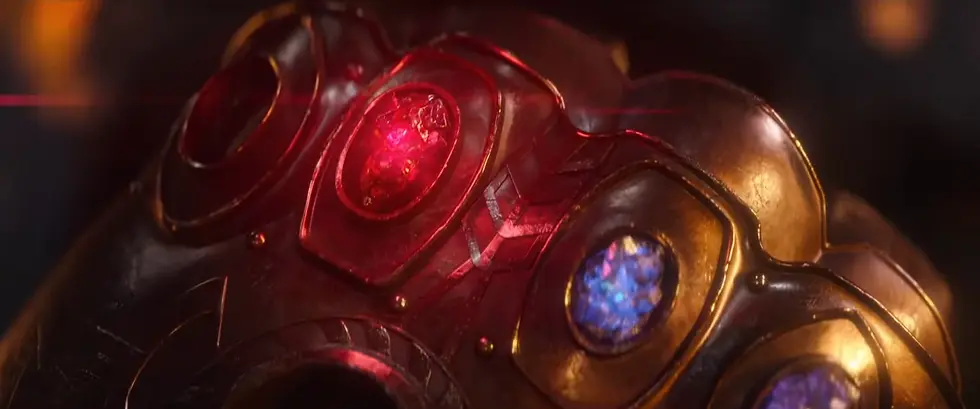
The Reality Stone - Avengers: Infinity War
Ad Summam
In the end, I want Trel to represent an ember of hope in a dead world. I want Aranèle to be the gentle breeze that fans him into a spark. I want Adria to be the spark that burns with him. I want this trilogy to show their rise to heroism, and I want readers to be cheering them on.
Instant stakes; show the problem. A broken world, a shattered legacy, and the promise of death. More than that, I need to show exactly what the villain has done to prompt the rage that drives Trel into becoming the beacon of hope he needs to be.
Trel is the hero. Everyone else needs to take a step back and let him take the lead. He’s the prince, after all, and it was his kingdom that burned.
The world is filled with magic, for good and evil. The supernatural needs to become more prominent in his quest to keep the reader constantly guessing. I need to make you ask “why?”, not “why should I care?”
Ultimately, I always say the first draft is getting words on pages. Second draft, which is where I’m at right now, is getting it to where I like it. The third draft, which comes next, needs to get it to the point where you like it.
Anyway, good talk. Now, I’ve spent the whole afternoon writing about what I need to write instead of writing it, so maybe I should get busy, huh?
Pax Bellum,
Matthias Spencer


Comments